
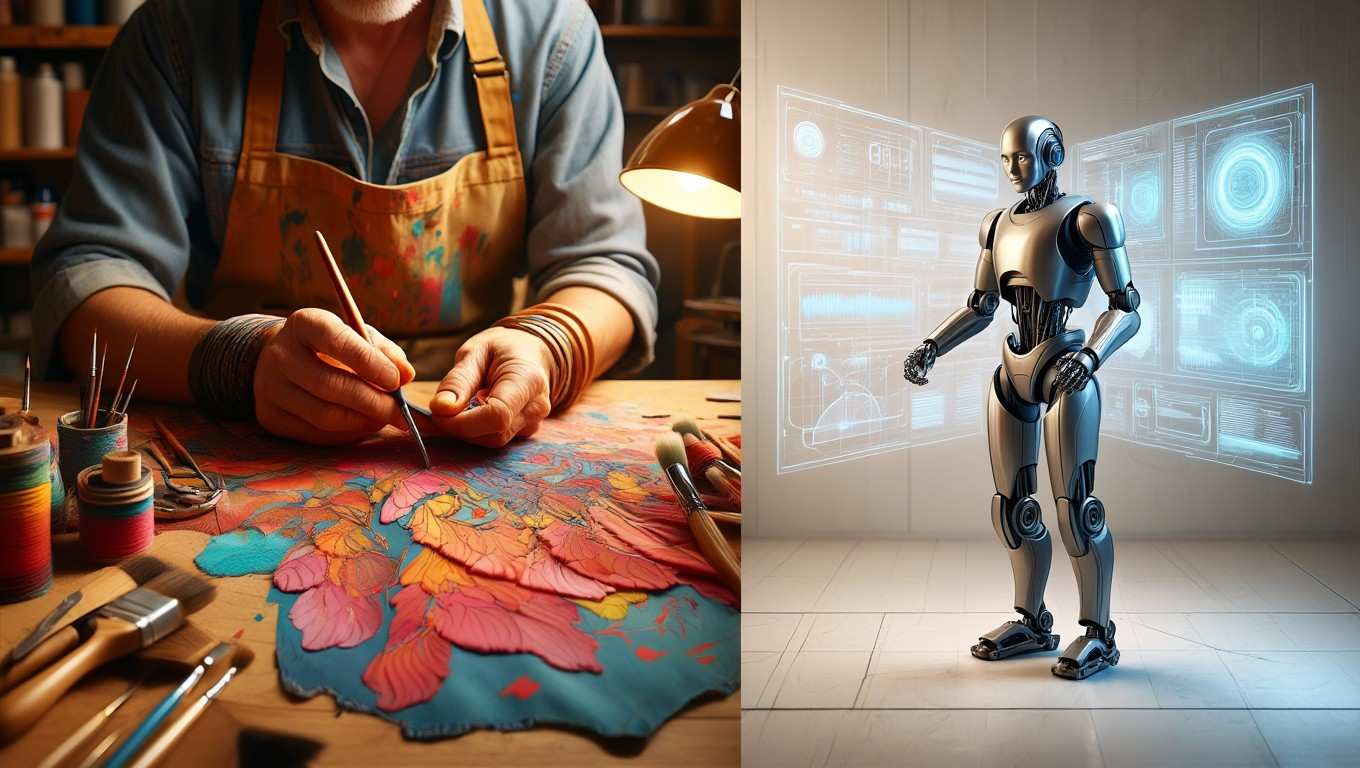
Two worlds which are very different are now on the same stage:
One is centuries of handcrafted creativity – costumes that were sewed by individuals, shows constructed through heart and soul, and societies that were driven by imaginative tales.
The other is the emergence of automation – a humanoid robot that can talk and present and even teach with the accuracy of a machine.
It is not a confrontation that is taking place in factories or technology laboratories.
It is being performed in front of live audiences.
And whether we know it or not, it is defining the future of how we make, perform and relate.
The Human Stage: In Which Creativity has not yet Lost Its Throne.
Competitions were organized way before the advent of technology, and this was founded on passion, craftsmanship and imagination.
There were creative competitions that have been in operation decades – generations.
Why do they still thrive?
Due to the fact that creativity is highly human.
The crafted costume tells a story.
An emotion-driven performance gets people moving.
A character that is developed makes contact.
These are not merely pieces of art, but are pieces of personalities.
And in an ever more automated world, this kind of human expression is becoming priceless.
The Robotic Stage: Learning to perform automation.
On the other extreme we now have humanoid robots on stage.
Not concealed in the laboratory.
Not behind glass displays.
However, on stage, presenting, and demonstrating like human speakers.
This changes everything.
Robots:
don’t get tired
don’t forget scripts
don’t feel nervous
do not commit emotional errors.
can give the same performance thousands of times.
To a certain degree, they are the ideal presenters.
But that raises a question…
When a robot has the ability to provide information in a superior manner, does this imply that it can substitute human performers?
The response is more involved than yes or no.
Robots can present.
But they cannot connect.
A robot is able to talk the correct words in the correct voice at the correct moment…
but it is not able to be excited.
It cannot be proud of the moment.
It does not know what story it is telling.
Humans create meaning.
Robots replicate data.
And the audiences can touch the difference.
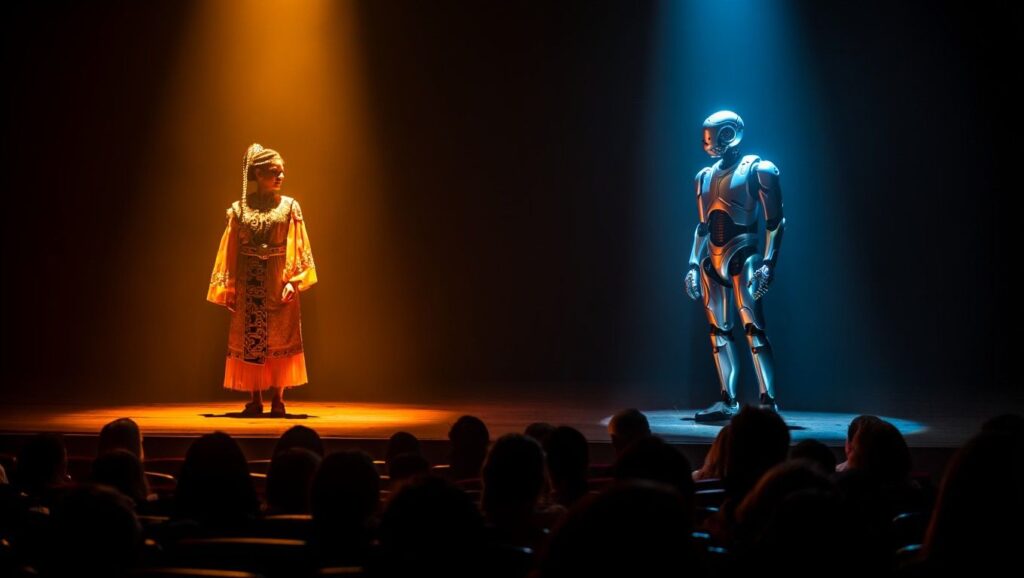
So Who Wins In This Secret War?
Surprisingly… neither side.
It is not a war whereby one substitutes the other.
It’s a convergence.
Monotonous, logical and information-intensive positions are being replaced by automation.
Creativity is still dominating areas which need emotion, creativity and narration.
The actual victory lies between them.
When humans use creativity
machines use precision
we obtain a new measure of acting, work, and utterance.
It is not the case of humans against robots.
It’s humans with robots.
The Real Future: Competition, Not Collaboration.
The emergence of humanoid presenters demonstrates to us the capability of automation.
The history of the long-established creative competitions demonstrates to us what can not be done by automation.
And both, combined together, know the truth:
Robots can inform.
Humans can inspire.
Machines can demonstrate.
People can imagine.
Ultimately, automation does not pose any threat to creativity because it enhances creativity.
When machines replace the mechanical jobs, human beings are at last left with more time to practice what we perfect:
Create. Perform. Innovate. Transform.
That is why creativity will always be the last word.
Leave a Reply